A Dance of Fire and Ice
- 4.7
- Rating
- 1.00M
- Installs
- $1.99
- Price

 Analysis by App-foxy
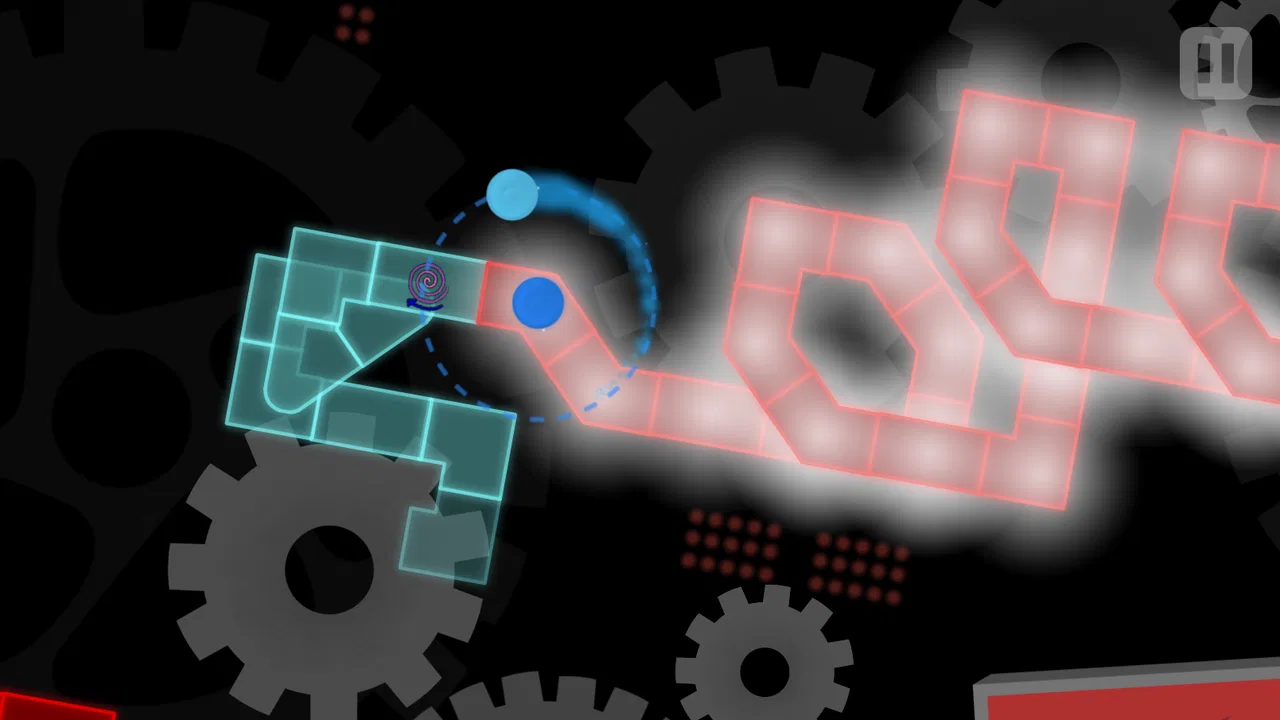
I usually approach rhythm games expecting quick entertainment: a few songs, simple taps, and a difficulty curve that becomes familiar after a short while. A Dance of Fire and Ice takes a different route. It reduces the action to a very small input, then asks for unusually careful timing as two planets travel around a winding track. The idea is easy to understand, but the precision required can make even a short session feel demanding.
That contrast is what makes this music game interesting in a shared household. One person can pick it up in a spare moment, while another can watch, listen, and offer timing advice without needing a long explanation. At the same time, it is not a relaxed background game for everyone. The repeated attempts, strict rhythm, and occasional frustration mean that the right expectations matter, especially when people are taking turns on the same phone or tablet.
Developed by 7th Beat Games, it has built a strong audience since its release on October 4, 2014. Its average rating is 4.6 from around 33 thousand ratings, and it has passed one million installs. Those figures fit my impression of the game: it is a focused experience with a clear identity, rather than a broad music collection trying to appeal to every kind of player.
You May Also Like

 Blood Strike: 2.5 Anniversary
Blood Strike’s Loadouts Turn Every Drop Into a Tactical Gamble
A close look at Blood Strike’s custom loadouts: how fast access to signature weapons reshapes its battle royale rhythm, rewards preparation, and narrows the gap between fights.

 Pandora - Music & Podcasts
Pandora’s Music Is Easy to Start, but Harder to Recover
Pandora’s strength is its low-effort path from a seed to a station. Its weak spot is how much confidence it asks you to place in connection, setup, and quiet recovery.

 8 Ball Pool
 Is Built on Rivalries, Rematches, and Routine
A close look at the rivalries, rematches, shared routines, and unanswered safety questions that turn a quick pool match into a persistent mobile community.

 Samsung Music
’s Quiet Strength Is Playing What You Already Own
Its reach comes less from spectacle than from dependable access to a personal library. That simplicity is both the app’s strongest retention engine and its ceiling.

 AccuWeather: Weather Radar
AccuWeather Review: A Quick, Clear Forecast for Everyday Decisions
For everyday plans, the best forecast is the one you can understand quickly. AccuWeather makes rain timing, radar, and local conditions easy to act on, with a few trade-offs.

 Hill Climb Racing
Why Hill Climb Racing Still Turns Crashes Into One More Run
A tiny car, a bumpy hill and one more upgrade: Hill Climb Racing keeps resurfacing because its simple chaos makes every near-miss feel personal.
More From Our News Desk
View All News


How the game works when several people share one device
The central action is wonderfully direct. The two orbiting planets move along a route, and I tap when the timing is right. There is no need to learn a large control scheme or remember a collection of character abilities. The challenge comes from observing the path, hearing the beat, and making each input at the correct moment.
That makes it particularly suitable for short shared-device sessions. If somebody is waiting for a turn with a family tablet, they can watch another player attempt a section and understand the objective almost immediately. A younger player might focus on the visual movement, while an older player may rely more heavily on the sound. Either way, the game creates a natural spectator role instead of leaving everyone else disconnected.
In my experience, the spectator is often more involved than expected. When a run fails, the person watching can usually identify whether the tap came too early, too late, or during a visually confusing turn. That does not replace practice, but it turns failure into a small conversation rather than a silent restart. For a household that enjoys solving things together, this is one of the strongest reasons to consider it.
A realistic example would be a short evening session after dinner. One person plays with headphones or a comfortable volume level, while another sits nearby and counts the rhythm quietly. They might switch after a few attempts, not because the game has a built-in family mode, but because the structure naturally supports taking turns. The session can remain brief if frustration rises, or continue when everyone is curious about the next pattern.
The main limitation is that shared play depends on patience. This is not a party game where several people press buttons at once, and it is not a cooperative game with separate roles. Only the person holding the device is actively controlling the planets. If your household wants simultaneous competition, a multiplayer music title would be a better fit.
Why the tiny control scheme still feels demanding
The single-input design can be misleading. At first, tapping may seem too simple to sustain a full game, but the path keeps changing and the timing leaves little room for casual guessing. I found that my attention moved between three things: the visual position of the planets, the sound of the beat, and the memory of what was coming next.
This combination rewards consistency more than speed. Tapping harder or more quickly does not help. A useful habit is to keep the device steady and use the same finger position for repeated attempts. When I changed how I held the phone, even familiar sections could feel less reliable because my visual focus and tapping motion no longer matched.
For shared devices, this has a practical consequence: players should avoid passing the phone during an active attempt. The game is much easier to judge when the player has settled into one grip and one listening position. A clean handoff between attempts is less disruptive than trying to switch in the middle of a run.
Another useful approach is to treat each failed attempt as information. Instead of immediately tapping faster, I recommend listening for the pulse and noticing the exact visual moment that preceded the mistake. This is especially helpful for children or new players who may assume that a failure means they lack rhythm. Often, the real issue is that they are watching the wrong point on the track.
Setting boundaries before the first attempt
Because the game is inexpensive rather than free, it is worth deciding who will use it and where it belongs on a shared device before downloading it. The listed price is $1.99, and in-app purchases are listed at $1.99 per item. I would explain that purchase decisions should stay with the device owner, particularly when children use the same phone or tablet.
That is not a criticism of the game itself; it is simply sensible shared-device housekeeping. A child may understand the tapping perfectly while still not understanding that an in-game purchase affects the household budget. Keeping the purchase conversation separate from the gameplay avoids confusion and makes the boundaries clear.
The current version is 2.9.9, and the game requires Android 5.1 or later. For a household with an older device, checking compatibility before planning a shared session is practical. If the game is installed on more than one device, it is also useful to agree on which one is the main play device, so progress and turns do not become confusing.
I would also establish a simple time rule. The game encourages “one more attempt” because each failure feels close to success. That can be motivating, but it can also stretch a short break into a much longer session. A rule such as stopping after a fixed number of tries, or switching when another person has been waiting, keeps the experience friendly without taking away the challenge.
For adults, the same boundary can be useful. Precision games can become surprisingly absorbing, especially when a difficult section seems almost solved. If I am using it during a work break, I prefer deciding the length of the break first rather than trusting myself to stop after the next attempt.
Coordinating sound, attention, and turns
Sound is not a decorative extra here. The rhythm provides important information, so playing in a noisy room can make the experience much harder. In a shared household, I would choose a time when television, conversation, or kitchen noise is not competing with the beat. If that is impossible, headphones can help the active player, although the people watching will then lose part of the shared experience.
This creates a small coordination trade-off. Speakers make coaching and celebration easier, but they may disturb someone nearby. Headphones improve concentration, but they turn the session into a more private activity. I would use speakers for casual attempts and headphones when a player is practicing a stubborn section seriously.
It also helps to agree on the kind of advice spectators should give. Calling out “now” can be useful for a beginner, but constant instructions may distract the person who is learning to internalize the rhythm. I prefer one calm observation after a failed run, followed by a chance to try again without commentary. The goal is to help the player notice patterns, not to make another person responsible for every tap.
For younger players, counting can be a good bridge between watching and listening. An adult might quietly mark the pulse during an early section, then gradually stop so the child can take over. This turns the game into a small timing exercise without pretending that every mistake needs correction. The best coaching is temporary; the player should eventually feel that the rhythm belongs to them.
On a shared tablet, screen position matters as well. A player sitting too far away may see the route but miss small visual changes, while someone leaning over the screen can make the player feel rushed. Giving the active player a comfortable position and asking spectators to remain slightly back makes the session less tense.
Age context and trust within the household
The content rating is Everyone, which matches the absence of a need for mature themes to make the game work. The important age question is not whether a child can understand the objective; most players can. It is whether that child enjoys repeated precision challenges without becoming upset when progress is slow.
Some children will find the game satisfying because the rules are clear and improvement is easy to notice. Others may interpret each restart as punishment, particularly if they are used to games that offer frequent rewards or forgiving controls. I would introduce it as a timing challenge, not as a simple children’s game. That framing makes the difficulty feel intentional rather than surprising.
Trust also matters when adults share a device with children. A child should know whether they may open the game independently, whether they can use sound, and whether they should ask before making any purchase. Those are household agreements, not features I would assume the game provides. Clear expectations prevent a fun rhythm session from becoming an argument about device use.
For teenagers and adults, the game may be more appealing as a focused test of concentration. It does not need a complicated story or a large collection of systems to hold attention. The satisfaction comes from learning a route and executing it cleanly. That can make it a good alternative to scrolling when someone wants a short activity with a definite mental target.
Still, I would not recommend it to a player who strongly dislikes repetition or who wants a relaxed music experience. A conventional music app is better for listening without input, and a more forgiving rhythm game may be better for someone who wants to feel the beat without restarting after small timing errors. This title is for people who enjoy precision, not merely for people who enjoy music.
Where it differs from ordinary music games
Many rhythm games surround their timing mechanic with songs to collect, characters to upgrade, visual effects, or score-chasing systems. A Dance of Fire and Ice feels more stripped down. The planets and the route are the focus, so the player’s attention is directed toward movement and timing rather than toward managing a wider game world.
That narrow design is a strength when I want a clean challenge. There is less to distract me, and a failed attempt usually tells me that my timing needs work. It is also a weakness if I want variety through customization, social competition, or a broader arcade structure. The game’s appeal depends heavily on whether its central mechanic feels rewarding to you.
Compared with tapping along to a familiar song, this experience asks for more visual discipline. I cannot simply follow a chorus I already know and expect that familiarity to carry me. The winding route creates its own sequence, and the player has to coordinate what is seen with what is heard. That makes it feel closer to learning a precise movement pattern than casually playing along with music.
One non-obvious strength is how well the game exposes the difference between hearing a beat and acting on it. A person may confidently say they are following the rhythm, then discover that their finger consistently lands just ahead of it. Reviewing that habit through repeated attempts can be useful beyond this game, especially for anyone who enjoys timing-based activities.
Another trade-off is that the minimalist control makes the game accessible to people who avoid complicated controls, but it does not make the game easy. This is an important distinction when recommending it to friends or family. I would describe it as simple to operate and demanding to master, rather than beginner-friendly in the broader sense.
Practical habits that make practice less frustrating
I get better results when I begin with a short warm-up instead of attacking the hardest section immediately. A few comfortable attempts help me settle into the pulse and reduce the tendency to tap from nervous anticipation. This is especially useful when another person is waiting, because the player can build confidence before attempting a difficult passage.
Another effective habit is to change only one thing after a failure. I might focus more on the sound, relax my grip, or watch the next turn rather than the current planet position. Changing everything at once makes it difficult to know what actually helped. This single-variable approach is a small but valuable way to turn repetition into deliberate practice.
When coaching someone else, I would avoid taking the device and demonstrating repeatedly. A demonstration can show the intended timing, but too much adult control can make a child feel that success belongs to the demonstrator. It is better to explain one observation, return the device, and let the player test the idea themselves.
For a group, a rotating order works better than an informal scramble. Each person can have a short attempt, then pass the device cleanly. This prevents the most confident player from quietly taking over and gives less experienced players permission to learn at their own pace. The game does not need a formal household competition to support this kind of structure.
Finally, I would stop when the player’s taps become rushed or the mood turns sour. Precision practice becomes less useful when attention has faded. Coming back later with fresh concentration often works better than forcing another dozen attempts, and that is particularly true for children who may need the session to end on a manageable note.
Who should choose it, and who should pass
I would recommend this game to someone who likes music but also enjoys exact challenges. It suits players who can appreciate a small control scheme, repeated practice, and the satisfaction of finally passing a section that once seemed impossible. It is also a good shared-device choice when people are happy to take turns and offer restrained encouragement.
It is less suitable for a household looking for a loud, social party game. There is no reason to expect simultaneous play from the core design, and spectators may become impatient if they do not enjoy watching attempts. It is also not my first recommendation for someone seeking a passive music experience, a story-driven adventure, or a game that gives generous rewards for casual tapping.
Parents and guardians may appreciate the Everyone rating and the straightforward premise, but I would still judge the fit by temperament rather than age alone. A patient child may enjoy it more than an older player who dislikes repetition. Conversely, a teenager may become deeply invested in improving timing while a younger sibling prefers a more forgiving game.
The cost is modest, but the value depends on how often the central challenge appeals to the player. Since the experience is built around timing the two planets through winding routes, someone who dislikes that exact loop may not find the purchase worthwhile. Someone who enjoys focused rhythm practice may get much more from it than a larger but less coherent music game.
My household verdict
After looking at it as both a rhythm game and a shared-device activity, I see a clear strength: it creates meaningful turns without requiring a complicated setup. One person plays, another can listen and observe, and both can discuss what went wrong. That makes it unusually easy to share informally, provided everyone understands that the active player needs quiet and concentration.
The boundaries are equally clear. Keep purchase decisions with the device owner, agree on turn length, and avoid treating the game as effortless just because the control is a tap. If a child uses the device, explain the sound and purchase expectations beforehand. Those small agreements do more for a pleasant household session than any attempt to rush through difficult sections.
For me, the best use is a short, focused challenge rather than an all-purpose music game. I like that the design does not hide its main idea behind unnecessary systems, and I respect how much attention it extracts from one simple input. I also recognize that the same strictness can frustrate players who want relaxed entertainment.
With a price of $1.99 and an Everyone rating, it is an easy option to consider for a household that already enjoys taking turns on a phone or tablet. The listed in-app purchase price is $1.99 per item, so I would still keep account and spending boundaries clear. If your group values patience, rhythm, and gradual improvement, this is a strong recommendation. If you want instant success, multiplayer action, or background listening, I would choose something else.
My final view is positive but specific: this is a precise music game that works best when treated as a shared practice challenge, not as a casual distraction for everyone. Its compact rules make it approachable, while its demanding timing gives it staying power. The right player will find each attempt informative; the wrong player will simply find it repetitive. Knowing that difference before installing is the key to enjoying it.
FAQs for A Dance of Fire and Ice
01What is the main gameplay of A Dance of Fire and Ice?
A Dance of Fire and Ice is a rhythm-based game where players control two orbiting spheres traveling along a path. The objective is to keep them on track by tapping the screen in time with the music. Each level presents unique challenges and rhythms, requiring keen timing and focus.
02Is A Dance of Fire and Ice suitable for all ages?
Yes, A Dance of Fire and Ice is suitable for players of all ages. Its simple mechanics make it accessible to younger audiences, while the increasing difficulty and complex rhythms provide a challenge for more experienced players. However, it requires patience and precision, which may be challenging for very young children.
03Does A Dance of Fire and Ice require an internet connection?
No, A Dance of Fire and Ice does not require an internet connection to play. Once downloaded, all levels and features are accessible offline, making it a convenient game for travel or situations where internet access is limited.
04Are there in-app purchases in A Dance of Fire and Ice?
A Dance of Fire and Ice is a premium game, meaning it requires a one-time purchase to download. There are no in-app purchases or ads, allowing players to enjoy the full experience without interruptions or additional costs once they have bought the game.
05Can I play A Dance of Fire and Ice on multiple devices?
Yes, A Dance of Fire and Ice can be played on multiple devices, provided they are linked to the same app store account. This allows players to enjoy the game on different devices without having to repurchase it, and progress can be synced if a cloud save feature is available.
Pros
- Unique rhythm-based gameplay.
- Visually stunning with vibrant colors.
- Simple controls
- easy to learn.
- Engaging soundtrack enhances experience.
- Challenging levels for skill development.
Cons
- Steep learning curve for beginners.
- Limited level variety can feel repetitive.
- No multiplayer or co-op modes.
- Requires high precision
- not for everyone.
- Occasional performance lags on older devices.

A Dance of Fire and Ice
Gallery